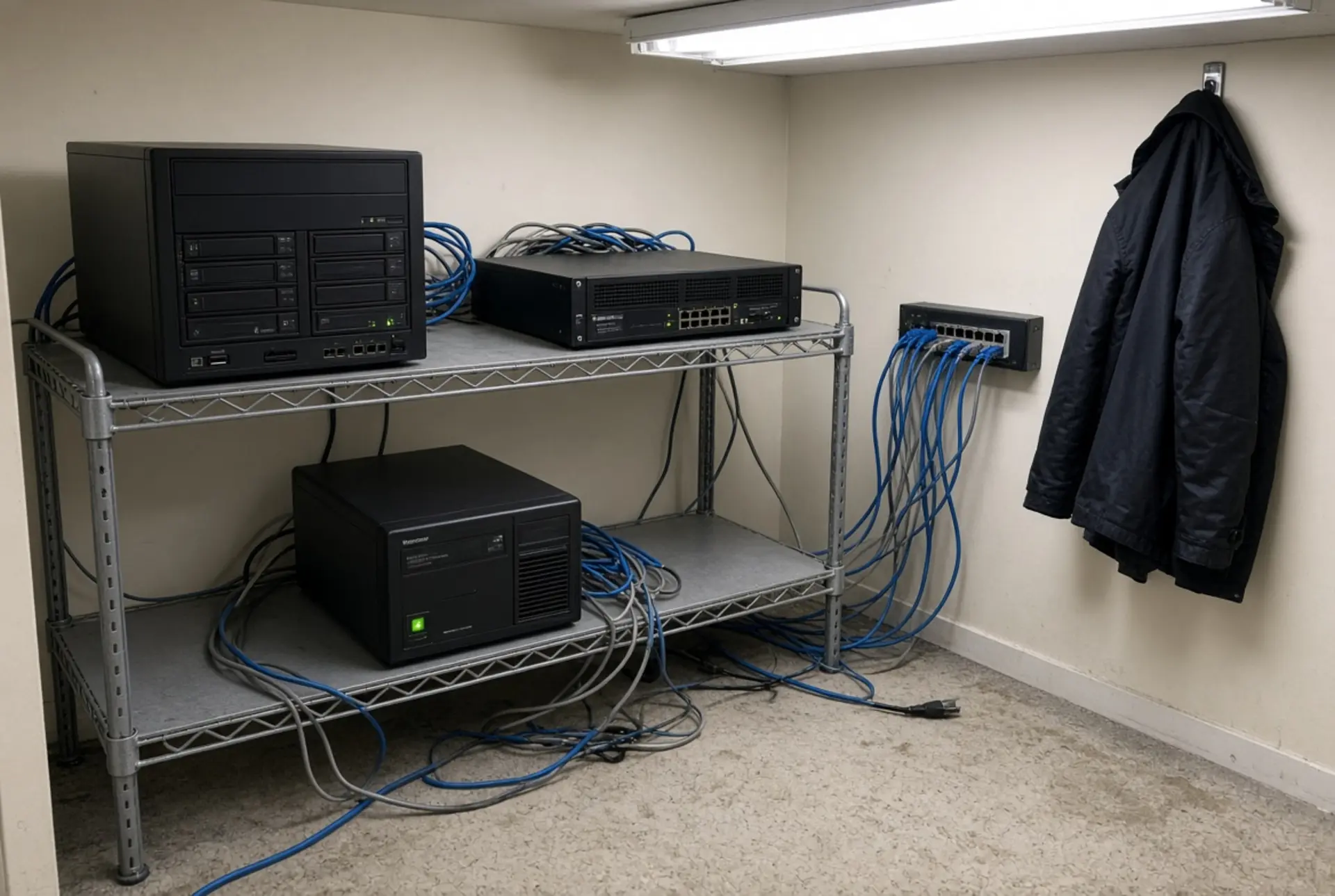
One power feed
- In the closet
- A single circuit and a consumer UPS with a battery nobody has tested.
- In the data center
- A and B feeds to the cabinet, UPS and generators at N+1 or better.
A server room in an office has one power feed, one air conditioner, one door and one person who knows it. A data center has two of everything and an audit trail. We move the equipment and the risk.
Six protections a data center provides that an office server room lacks or has only one of. A failure in any of them can stop the whole business.
Businesses rarely move because of the hazards themselves. Usually someone outside the business asks a question the closet cannot answer.
HIPAA, PCI DSS, CMMC and the SOC 2 questionnaires your own customers send all ask the same questions about physical access, power, fire and backups. A closet answers most of them with no.
Renewal forms ask where the servers are, who can reach them, and whether backups are kept off-site and have been restored. The answers affect the premium, or whether the insurer offers cover at all.
Outages come from a failed UPS battery, a tripped breaker, an air conditioner that stops over a holiday weekend, or a single failed disk. Each can cost days, and each is predictable.
The office shrinks, moves or goes hybrid, and the closet has to go somewhere. Moving it to a data center once is cheaper than rebuilding it in the next office.
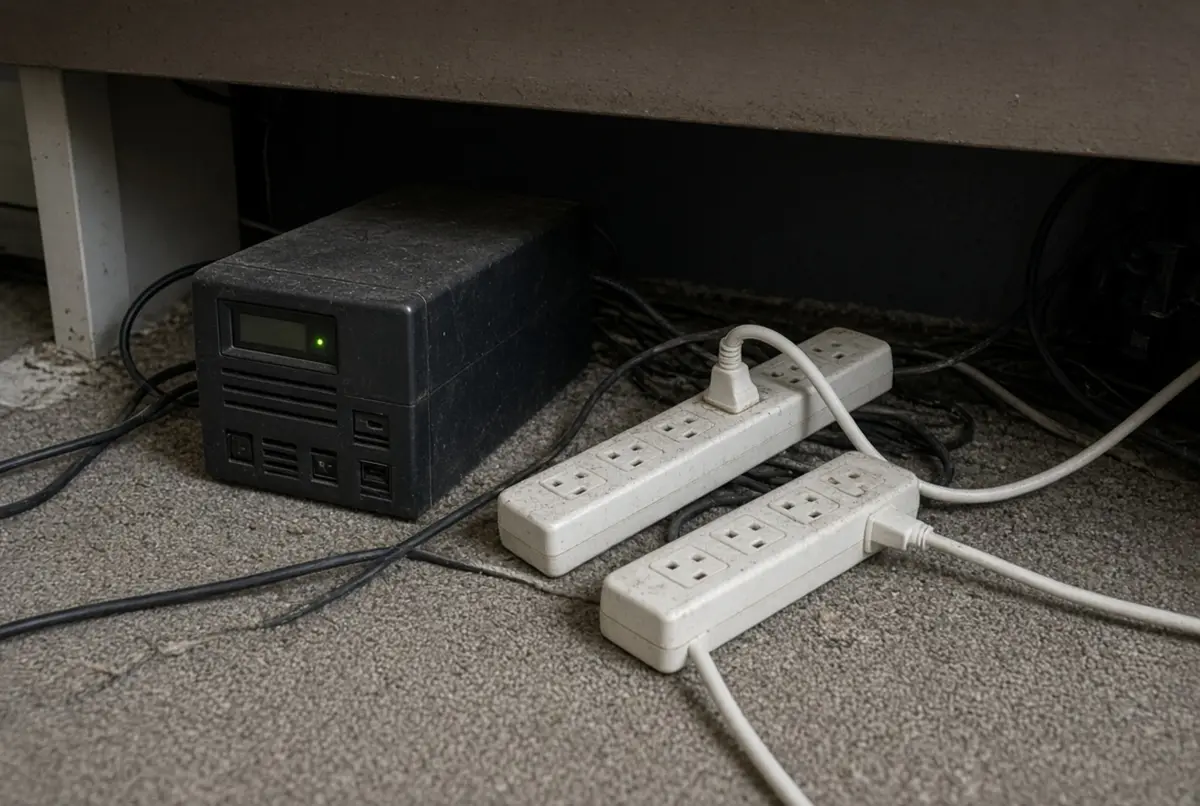
Power in an office: a consumer UPS and power strips under a desk.
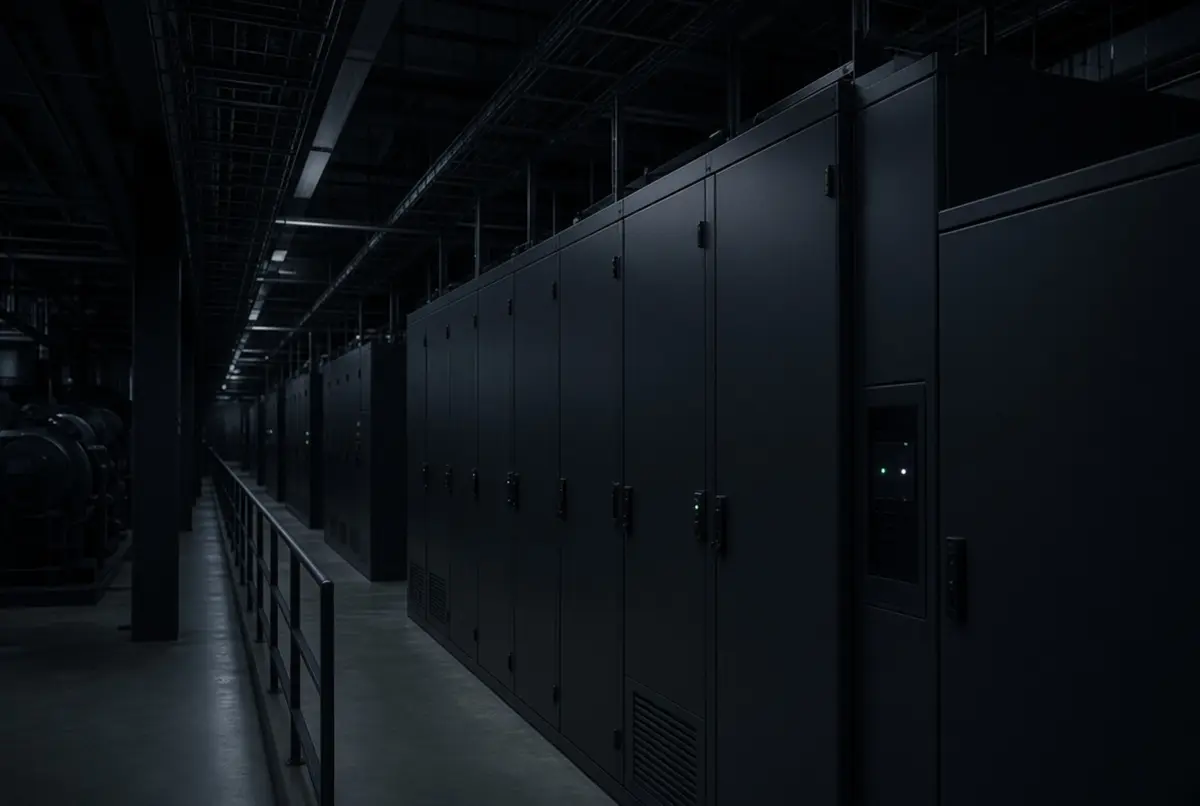
Power in a data center: a power gallery behind the data hall.
These are the questions an auditor or an insurer asks. If you answer no to three or more, the room is a risk the business should deal with.
Ask us to assess the roomMost office closets become a partial rack or one cabinet. The office keeps a switch and a firewall; the servers leave.
See data center services for footprints, markets and the network. If the servers are in the cloud rather than a closet, start with cloud repatriation. If the backups are the worry, start with backup and disaster recovery.
We inventory the closet: every device, what it runs, what it draws, who depends on it. Most closets fit a partial rack or one cabinet.
We design the footprint and the network: the private link from the office to the cabinet, the firewall and switch that stay in the office, and backups for everything that moves.
The cabinet, power, circuits and cross-connects are installed and tested before anything moves. Equipment too old or out of warranty to move is replaced with new hardware.
Equipment moves in a planned window, usually a weekend. The old closet keeps running, with a rollback plan ready, until the new environment is confirmed.
Monitoring, patching, backups and remote hands from then on. The closet becomes a switch and a firewall, and the audit answers change.
Something not covered here? Call 817-207-8911.
An office server room usually has one power feed, building air conditioning, a door many people can open, sprinklers as fire protection and one internet circuit, so a single failure in any of them stops the business. A data center has redundant versions of each and an audit trail.
HIPAA, PCI DSS and CMMC, and the SOC 2 style questionnaires customers send, all ask about physical access control, environmental protection, power redundancy and tested backups. Office rooms typically fail the physical and environmental questions.
A single server. Telnetrix offers partial-rack colocation from one rack unit in a shared cabinet with A and B power and remote hands, which is where most office closets land.
Over a private link or VPN from the office firewall to the cabinet, designed before the move. The office keeps a switch and a firewall; users keep working as before.
Moves run in a planned window, usually a weekend, with the old room left running until the new environment is confirmed and a rollback ready. New hardware is often built in the data center first so only data moves.
Insurers ask where servers are, who can reach them, whether backups are off-site and restored, and how long power lasts. An audited data center with tested backups answers each of those, which is what the renewal form is asking for.
Describe the room, or send a photo of it. We will come back with what would move, what would stay, and what the footprint looks like.
Phone
817-207-8911